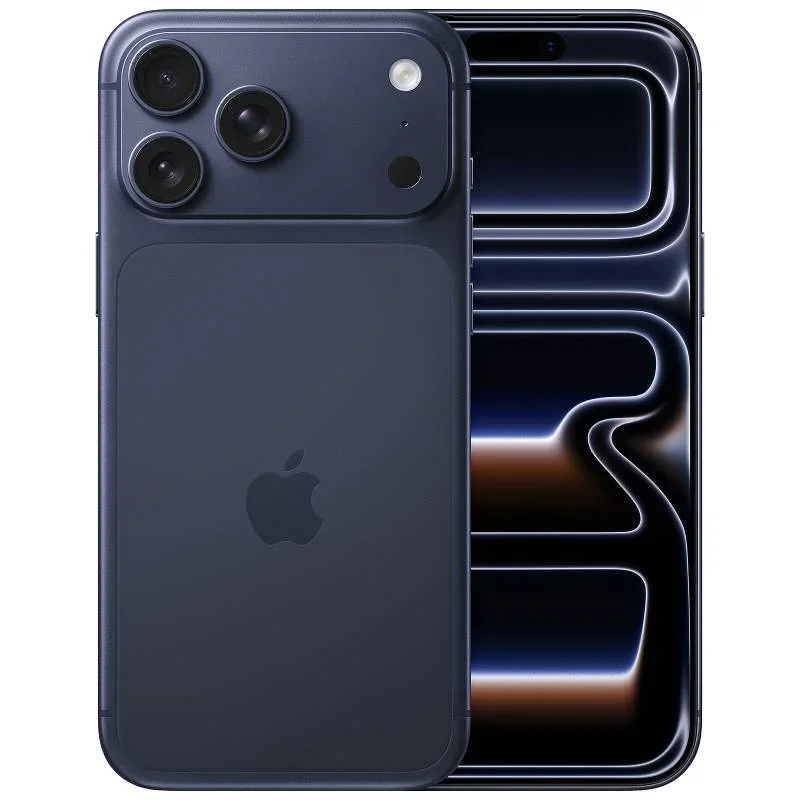
Beyond the usual improvements in performance and camera capabilities, the iPhone 17 introduces
important updates on the 5G connectivity side, including broader band support,
continued expansion of 5G Standalone (SA) readiness, and improved alignment with
operator voice services.
In this article, we focus specifically on the network and 5G aspects of the iPhone 17
and iPhone 17 Pro — what actually matters in real-world mobile networks rather than marketing claims.
iPhone 17 models overview
The iPhone 17 family consists of multiple variants, all sharing a common 5G modem platform with
regional differences depending on market and carrier requirements.
- iPhone 17 – optimized for global sub-6 GHz 5G coverage
- iPhone 17 Pro / Pro Max – expanded regional SKUs, including mmWave support in select markets
For historical comparison across Apple generations, see:
Which iPhones Support 5G?
Sub-6 GHz vs mmWave 5G on iPhone 17
As with previous generations, Apple continues to support two distinct categories of 5G:
sub-6 GHz and mmWave. Understanding the difference is essential to
set realistic expectations.
Sub-6 GHz 5G (primary global experience)
- Wide-area coverage and better indoor penetration
- Strong real-world speeds, especially on mid-band spectrum
- Best option for mobility, roaming, and battery efficiency
mmWave 5G (select markets)
- Extremely high peak speeds in dense urban hotspots
- Limited range and sensitivity to obstacles
- Available mainly on US variants of iPhone 17 Pro models
For most users worldwide, sub-6 GHz 5G delivers the most consistent experience,
while mmWave remains a niche performance enhancer in specific locations.
iPhone 17 5G network compatibility: NSA and SA
The iPhone 17 fully supports both 5G NSA (Non-Standalone) and
5G SA (Standalone) modes. The actual user experience depends on the operator’s
core network architecture and commercial activation.
5G NSA
- 5G radio anchored on a 4G/LTE core
- Still widely deployed by operators globally
- Delivers strong throughput with proven stability
5G SA
- True 5G core (5GC) connectivity
- Lower latency and improved efficiency
- Foundation for advanced services such as slicing and private 5G
From a device perspective, the iPhone 17 is SA-ready. Activation remains subject to
operator policies, SIM/eSIM provisioning, and regional rollout status.
To understand the architectural impact of SA end-to-end, see our professional material:
5G Fundamentals & Architecture Training
Supported 5G bands (official deployment perspective)
The iPhone 17 supports a broad range of low-band and mid-band 5G frequencies, ensuring
compatibility with the vast majority of commercial 5G deployments worldwide.
- Low-band 5G: coverage-oriented spectrum used for nationwide reach
- Mid-band 5G: capacity-focused spectrum delivering the best balance of speed and coverage
- mmWave: supported on selected regional Pro variants
Because Apple releases multiple regional SKUs, users should always verify:
- Their operator’s primary 5G bands
- The exact iPhone 17 model sold in their country
- Roaming band compatibility if traveling frequently
For a practical example of how we analyze device connectivity, see:
Samsung Galaxy A14 5G – Network Compatibility Review
Voice services on iPhone 17: VoLTE and VoNR
Voice remains a critical service for mobile networks, even in the 5G era.
VoLTE
- Fully supported on iPhone 17 across most operators
- Primary voice service for NSA deployments
- Dependent on IMS provisioning by the carrier
VoNR
- Native voice over 5G SA
- Available only where operators have launched SA voice services
- Activation depends on network maturity and device profiles
In practice, most users will experience VoLTE by default, with VoNR gradually
becoming available as operators expand SA voice deployments.
Enterprise and private 5G considerations
For enterprise and professional users, the iPhone 17 aligns well with modern network requirements:
- Compatibility with operator-managed private 5G offerings
- Support for eSIM-based enterprise provisioning
- Readiness for SA-based enterprise services as they become commercially available
These aspects are increasingly relevant for industrial sites, campuses, and mission-critical use cases.
Buyer checklist: network-focused view
- Confirm your operator’s 5G bands (especially mid-band)
- Check whether 5G SA is enabled on your subscription
- Verify VoLTE activation on your SIM/eSIM
- If traveling, prioritize wide sub-6 GHz support
FAQ
Does iPhone 17 support “real 5G”?
Yes. The iPhone 17 supports both sub-6 GHz 5G and 5G Standalone.
The actual experience depends on operator deployment rather than the device alone.
Is mmWave 5G available on all iPhone 17 models?
No. mmWave support is limited to specific regional variants, primarily in the US.
Does iPhone 17 support VoNR?
The device is VoNR-capable, but availability depends entirely on the operator’s SA voice rollout.
Related reading
🎓 Want to go beyond device specs?
Learn how 5G really works — from radio access to core networks — with our
professional 5G training courses
Benefit from Massive discount on our 5G Training with 5WorldPro.com
Start your 5G journey and obtain 5G certification
contact us: contact@5GWorldPro.com