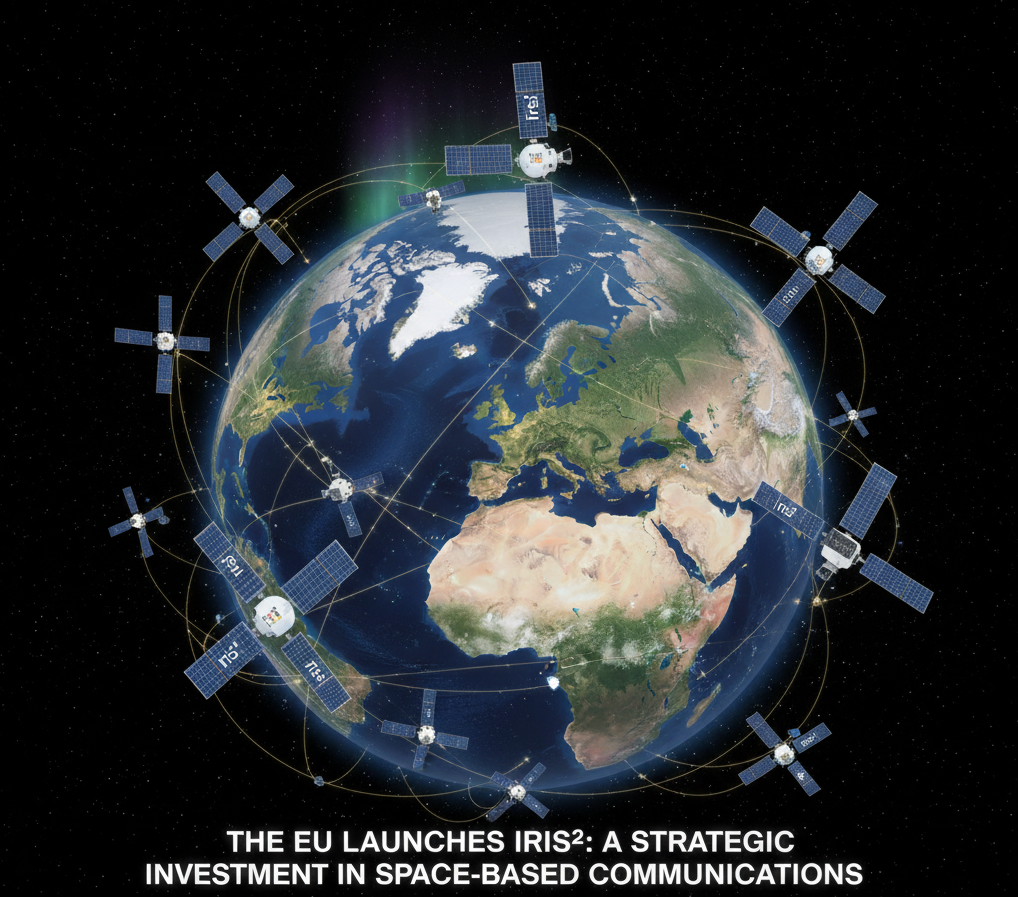
In a significant stride toward achieving digital sovereignty, the European Union has greenlit the Iris² satellite constellation with a committed budget of €10.6 billion. This massive infrastructure project is intended to establish a secure, EU-controlled alternative to existing non-European networks. Moreover, most notably, it aims to offer an alternative to Starlink. This is why The EU Launches Iris² as a strategic move for its autonomy.
Key Drivers of the Project:
- Reduced External Reliance: Establishing an independent communications backbone to enhance Europe’s security and control over its data. The EU Launches Iris² to ensure this independence.
- Guaranteed Connectivity: Ensuring highly resilient, secure connectivity for critical governmental, commercial, and civilian needs.
- Universal Access: Extending broadband services to remote and currently unconnected European regions. The EU Launches Iris² to bridge the digital gap in these areas.
Known formally as the Infrastructure for Resilience, Interconnectivity, and Security by Satellite, Iris² is planned to begin operations before 2030, offering coverage that stretches across Europe, into Africa, and the Arctic. This investment underscores the geopolitical reality that low-Earth orbit (LEO) satellite systems are now a critical national security and strategic asset. As a result, The EU Launches Iris² to bolster its stance in the global satellite arena.
Benefit from Massive discount on our 5G Training with 5WorldPro.com
Start your 5G journey and obtain 5G certification
contact us: contact@5GWorldPro.com